Day before yesterday at AAMI Park in 35-degree heat, Juan Mata reminded us why class never fades, it simply evolves. At 37 years old, the Spanish maestro orchestrated Melbourne Victory’s commanding 5-1 victory against Wellington Phoenix with the kind of performance that transcends age and statistics.
Juan Mata vs Wellington Phoenix
What struck me most wasn’t just his exquisite touch and vision but it was his game intelligence and ability to dictate tempo. Every pass seemed to carry a purpose. Every movement on and off the ball orchestrated the flow of play. This is a player who understands football at a level that goes beyond physical capabilities, he reads the play three passes ahead, positioning himself to dictate rather than dominate.
His positioning exploited Wellington’s pressing triggers, creating passing angles where none seemed to exist. He understood when to slow down the play and when to accelerate. His movement off the ball created overloads in transition, allowing Victory to progress from midfield into attack. He wasn’t just receiving and passing; he was sculpting the entire attacking structure of his team.
Critics often point to running metrics, but watch Mata closely and you see explosive bursts when it mattered. In brutal Melbourne summer conditions, he covered ground when needed, his positioning eliminating the necessity for constant motion. That’s maturity. That’s craft. That’s a midfielder who has learned how to be effective by being intelligent.
His assist at the end of video, perfectly in space for Santos during the rout – epitomized his influence: simple, clinical and devastating. No wasted energy. No showboating. Just pure football intelligence. At 37, with nearly two decades at elite levels, Juan Mata proves that longevity in football isn’t about matching younger legs but it’s about sharpening your football IQ when your body naturally slows down.
The question isn’t whether Mata can still play. The question is: how many players at any age can control a game the way he does in the A-League?
In this article, I will be analysing Yves Bissouma’s performance while in possession of the ball/when the team had the ball so far this season under Ange Postecoglou.
Background
Malian International Yves Bissouma joined Tottenham Hotspur on 14th June 2022 for a £30m deal from Brighton & Hove Albion & signed a 4-year deal. He excelled in the Premier League under Graham Potter. After joining Spurs, he did not get a lot of game time under Antonio Conte and was not trusted as part of his midfield two in his 3-4-3 formation.
Ange-Ball
Ange Postecoglou has a philosophy that he always sticks to regardless of the competition or quality of opposition –
Entertaining & exciting style of play
Attacking football
Playing through the thirds
Playing out from the back
Retention of the ball
Rotations & Interchanges
Creating triangles & diamonds around ball carrier
Thoughts on Yves Bissouma
The 27-year-old midfielder is a midfield dynamo but has shown that he has shown signs that he can operate as a deep lying playmaker. He is known for his athleticism, high work rate & ability to cover a lot of ground both defensively and offensively. However, under Ange this season he has been orchestrating play and initiating attacks with his vision, composure, excellent passing accuracy and ability to dictate the tempo.
What Bissouma brings to the table?
Now let’s have a look at how he is using his qualities on the ball/when the team has the ball this season & transforming into a key cog in the Tottenham midfield. I have analysed 3 qualities that he brings to the table and picked up moments from some of the toughest games he has played so far against Liverpool & Arsenal.
1. His understanding of space
Bissouma has an excellent understanding of space on the football field. This understanding is a critical aspect of his play and contributes to his effectiveness on the field. The Spurs midfielder demonstrates an awareness of the space around him. This allows him to make quicker decisions on whether to pass, dribble or release the ball. The spatial awareness he possesses allows him to help maintain the tempo of the game & exploit gaps in the opposition’s defensive block.
This is what Ange Postecoglou once said – “Ball speed’s very important for us – ball speed’s number one. Even when we’re keeping possession I don’t want the ball to move slowly. What does that mean? When we pass it, pass it with purpose.We need movement so the next pass is always available and not too many touches on the ball. One or two touches, we move it. We move together as a team.”
There are 3 principles of space: Create, Occupy & Attack. But, to apply any of those principles you have to first “Identify” which one has to be applied. Let’s look at some clips and see how he applies all principles of space when in possession of the ball/when the team has the ball.
Initially, Bissouma occupies space as part of a double pivot in between Liverpool’s ST & RW. Body position to receive 1st pass from RCB – back to goal, to attract pressure from ST. He then stays in the shadow of ST to get underneath Sarr. Moves out of space to attack another space & then become the wall pass to Sarr from RCB Romero. Better positioning from RB Porro would have helped Tottenham progress the ball up the field.
Bissouma occupies space between Arsenal’s 1st & 2nd line of press and centrally in between opposition front two. Receives facing forward & delays the pass out wide to attract pressure. As soon as the ball is played wide, he vacates the space for RB Porro to come into. RB Porro bounces it off to Bissouma near the touchline which helps in progressing the play forward.
Look at how Bissouma combines play with Maddison & Van der Ven to beat the Arsenal press by playing 1-2 touches max. Then he shows urgency to get on the ball from LCB Van der Ven.
Starting position – centrally in between & behind the 1st line of press. He then plays out wide to Sarr. Look how he holds his position as Sarr looks to cut inside looking to attack the space inside the opposition defensive block. Later, he drops back into space to find Porro who is the spare player by opening up his body.
2. Providing support
The Malian International has a really good sense of where he needs to be on the field as he is aware of how he should be positioned to receive passes or be available for his teammates when in possession. He always looks to position himself to be available for passes from his teammates especially the CBs to make it easier for them to play the ball to him. The videos below will show you how his movements are well-timed and purposeful. He knows when to drop into space to receive the ball and when not to.
Look at how he plays in the shadow of the left striker this time, allowing Maddison to get centrally in between the opposition front 2 and he is providing support underneath as a safe passing option with time & space.
A similar scenario to the previous one but in this the opposition is not pressing at the start. He plays a short back pass with his back to opposition goal to entice the striker to press which opens up a passing lane for RCB Romero to find Sarr in between the lines. Sarr bounces off to Bissouma who is underneath again. Sarr moving away opens up passing lane for Bissouma to find Udogie but an inaccurate pass makes them lose possession.
Look at the urgency Bissouma shows to provide support to RCB Romero when the opposition team is pressing high and with intensity. He receives the ball facing forward and creates time & space because of the urgency he showed initially and finds the ST Son in between the lines with a vertical split pass.
3. Breaking lines
Bissouma can break lines using his dribbling ability and close ball control by taking on opposition players which helps in drawing defenders out of position & open up opportunities for his teammates. The 27-year-old midfielder’s capacity to read and manipulate space on the field is an asset to his team. The clips below will show you how composed and confident he is in high-pressure situations.
In the above clip you can see Bissouma’s ability to make quick decisions under high pressure. He had a quick little scan just before receiving the ball which allowed him to attack the space behind him by carrying the ball through the lines.
His vision and passing is really good. Look at how he picks out his teammates with precise passes that are cutting through the defensive lines. He is brave in possession and is always willing to get on the ball.
Here you can see his quick decision making and see how he stays calm on the ball. Then he breaks the opposition’s 2nd line of press which was a decisive move to advance the play in this moment.
In my opinion, Bissouma is a press resistant player. Here is a glimpse of his ability to protect the ball and resist pressure from two opposition players which is another key factor in his success at breaking lines.
The Spurs midfielder’s physical attributes make him really effective at carrying the ball through the lines. Look in the above video how he accelerates away from opposition pressure, advances the ball and draws away defenders out of position.
Key Stats
I would like to highlight some stats of Bissouma on the ball where does he rank in comparison to other midfielders in the last 365 days. The stats below have been picked up from FBREF.
In the above videos we have seen Bissouma’s ability to break lines by carrying the ball and playing those incisive passes through the lines and it makes sense when you see the stats for progressive passes and progressive carries, he is placed around the 85th percentile.
Now the above picture tells us how good he is as a defensive midfielder when on the ball. The clips showed as that he was looking to get on to the ball and always provided support to his teammates. We can see that he is placed very low for long passes per game that’s because of the playing style Tottenham have adapted under Ange Postecoglou but it doesn’t mean he is not good at it. We can see that he has a very high long passing accuracy (76.1%) which places him on the 88th percentile in the world. He can definitely get more involved in the attack but I think he is doing what he is being asked to as a defensive midfielder.
His ability of taking on players is exceptional. He completes 72.7% of the take-ons he attempts, placing him in the 96th percentile. The Malian International also gets 83.27 touches per 90 which puts him in the 94th percentile. Bissouma shows desire to always be involved, urgency to get on the ball and look to break lines by playing/driving forward sets him apart from other defensive midfielders in the world.
Conclusion
Yves’ combination of technical skills, physical attributes and understanding of space allows him to be effective when breaking lines which can be useful when unlocking compact defensive setups and will come in handy for Ange this season as most teams will look to sit back and breakaway on the counter against them. He is neat and brave in possession and his qualities as a midfielder on the ball allow him to influence the game in multiple facets whether it’s driving the team forward, creating goal-scoring opportunities or simply maintaining control and balance in midfield.
We have seen plenty of Bissouma now in this article. Ange has definitely brought out the best of him as a midfielder and we can see that in the stats and clips above. Bissouma is adaptable to different roles in the midfield and he can be whatever Ange wants him to be.
This article provides a comprehensive comparison of Melbourne Victory Women’s attacking play in the A-League Women’s season 2021-22 and 2022-23. The use of metrics and graphs will help illustrate the differences between the two seasons.
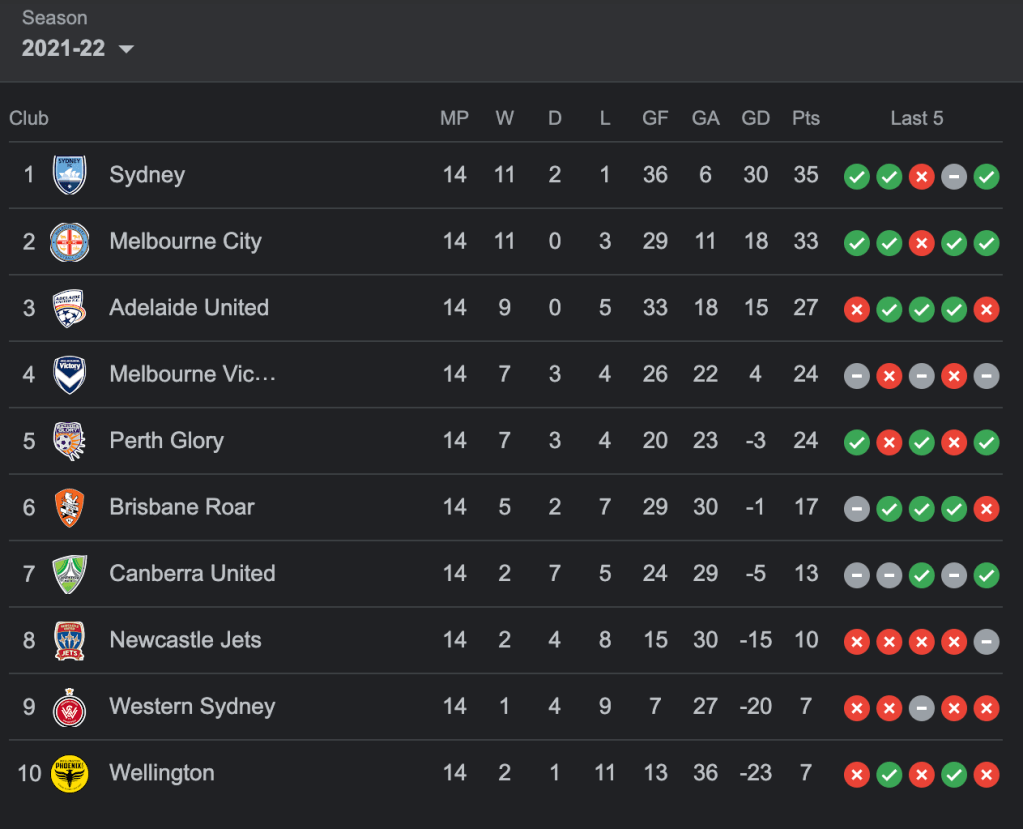
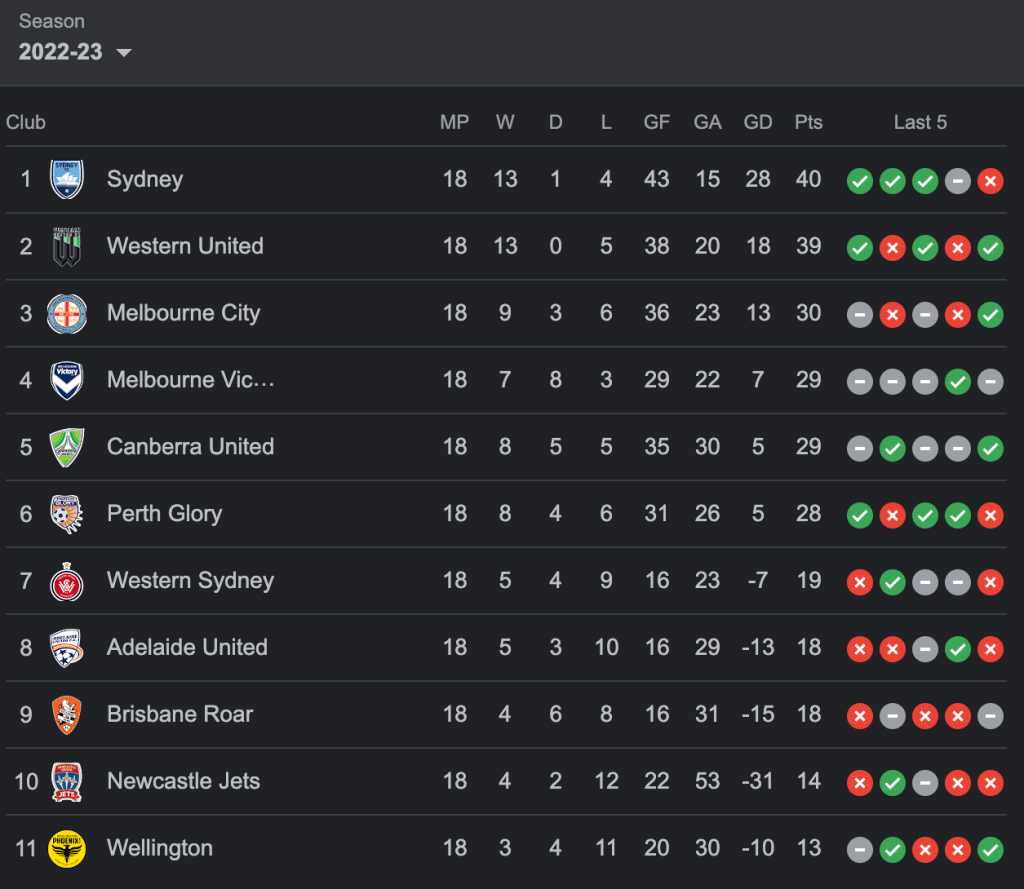
Melbourne Victory finished 4th in the regular season on the ladder in both the seasons. I have outlined 9 different metrics to compare the attacking play of the team in both seasons-
Goals per 90
xG per 90
Shots per 90
Crosses per 90
Key Passes per 90
Passes to final third per 90
Touches in penalty area per 90
Forward passes per 90
Number of passes 90
In the 2021/22 season, the team scored 1.9 goals per 90 whereas in 2022/23, they scored 1.6 goals per 90. The 1.9 goals per 90 in 2021/22 were scored at an xG of 1.5 per 90, which shows that they outperformed their xG. However in 2022/23 the xG was 1.8 per 90 which is higher than the previous season but they underperformed their xG & could only score 1.6 goals per 90.
Better qualities of chances were created in front of the goal in 2022/23 The team recorded 8 draws out of their 18 matches. Those draws could have converted into wins given that if they performed better in front of the goal when presented with the chances.
Lets dive deeper into how the chances were created in season 2022/23
Melbourne Victory women is known to play a mix of possession & direct style of play. Most of the times they looked to penetrate the final third by –
Find wingers 1 v 1 in the outside channels to deliver crosses into the box
The attacking midfielder making a forward run from deep getting in between opposition defensive line
The striker holds up the play to combine with the “10s” or gets in behind to receive a through/long pass
If we look at the numbers now, we can see that there was a massive increase in the number of crosses in the 2022/23 season. It went from being 13.5 per 90 to 16.7 per 90 which resulted in the team attempting more shots on goal (from 12.1 per 90 to 12.8 per 90).
Melbourne Victory had 52.17% possession on an average in the 2021/22 season which went down to 50.6% in the last season but if we compare the numbers of passes per game, it actually increased from 421.7 per 90 to 427.3 per 90. It showed that the team looked to move the ball a lot more than just holding it.
One major principle in possession that I noticed of the team was that they liked to circulate play side to side & always tried to find the right moment to progress the ball further up the field. Therefore, you can see in the above graph that there was a slight increase in the number of forward passes – from 159.8 per 90 in 2021/22 to 161.4 per 90.in 2022/23.
The numbers definitely show that there was a much more positive intent in their attacking play in 2022/23. They were a team that looked to always play through the lines but again which can mean nothing because it also depends on how the opposition sets up against them.
In my opinion, while in possession, the presence of Kayla Morrison & Alex Chidiac made up the spine of the team because of their ability to break lines by driving forward & playing the passes through the lines. As a result, we saw an increase in the number of passes into final third which went up from 51.4 per 90 to 54.7 per 90.
The number of key passes per 90 increased from 2.4 per 90 in 2021/22 to 2.9 per 90 in 2022/23. This was due to the presence of Beattie Goad who averaged 1.38 key passes per 90 & Alana Murphy – 1.42 key passes per 90. The team heavily relied on their vision & an eye for a killer pass when Alex Chidiac left after playing just 13 matches to go back to Racing Louisville in the NWSL.
In 2022/23 the team looked to get more players into the box (averaging 3 to 5) whenever they entered the final 3rd & having Melina Ayres available for about 14 games this season saw the number of touches in penalty area go up from 13.3 per 90 in 2021/22 to 17.2 per 90 in 2022/23. Her timing of runs to arrive into the box & hold-up play to bring other teammates into play was exceptional & made her the focal point of the team. She finished as the 2nd top scorer in the league just 2 goals behind Hannah Keane of Western United. Imagine if she were there for the 6 matches she missed out?
Conclusion
It will be really exciting to see how the team does in the 2023/24 season after signing the likes of Kurea Okino, Emily Gielnik & McKenzie Weinert to add more firepower to the final third
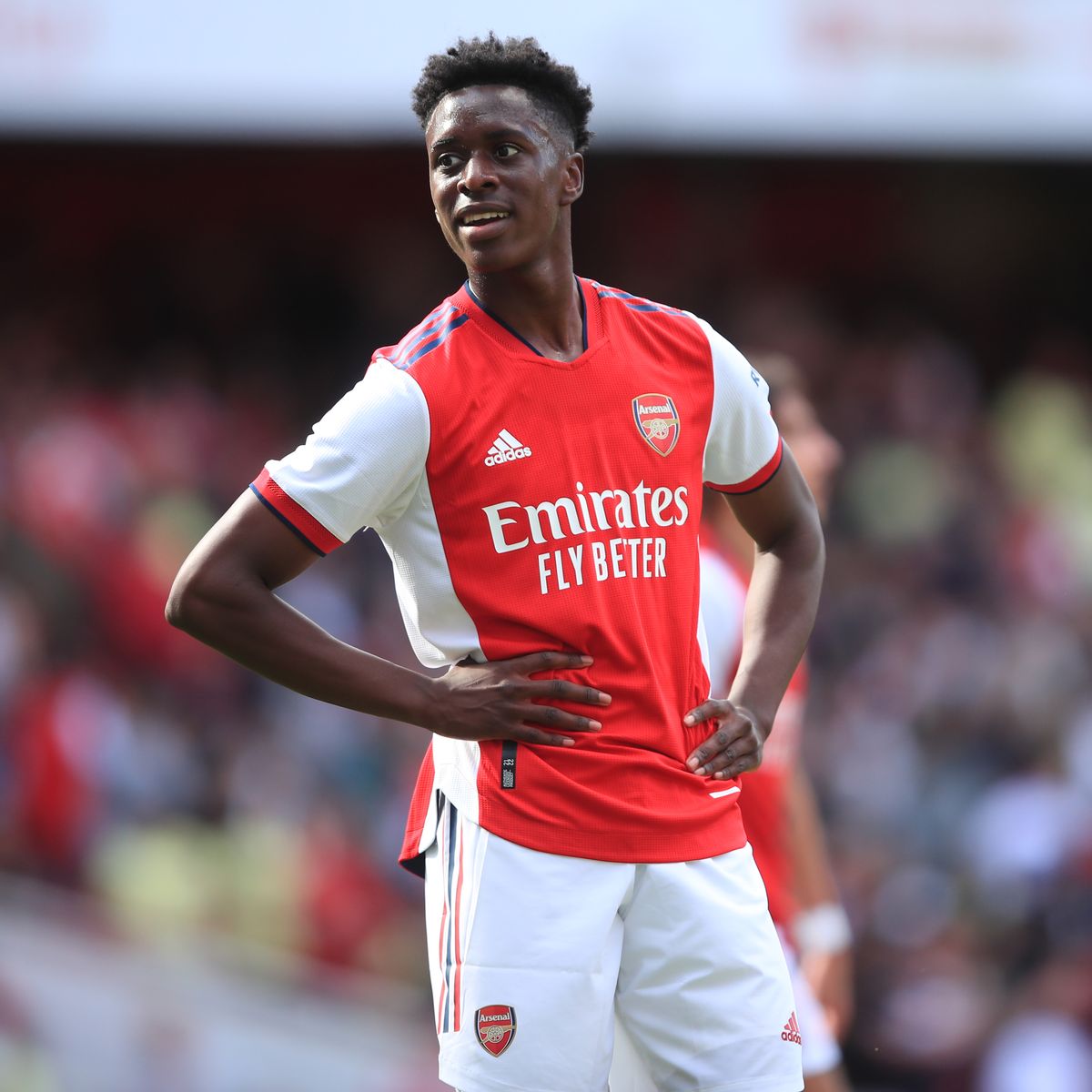
This scout report will provide an analysis of Lokonga’s individual talent as a player, and what he will bring to the table at Arsenal this season. In this article I have analyzed how can he fit in the tactics used by Mikel Arteta and taken out videos from his recent game vs Chelsea in the Premier League to show what he can really do.
Why was Lokonga signed?
Arsenal completed the signing of 21-year-old midfielder Albert Sambi-Lokonga from RSC Anderlecht for an initial fee of around £15million plus add-ons. Lokonga was the captain of his previous team and hence is viewed as a player who could challenge for a place in the first team this season and someone with a bright future.
Last season, Arsenal’s actions in possession were narrow and their positioning off the ball wasn’t helping in breaking through the oppositions’ pressing structures. Arsenal struggled to break through the opposition’s press and was often stuck in the central areas, unable to open the passing lanes and progress the ball efficiently.
Lokonga has been signed for what he does in possession, which is something similar to Thomas Partey. Mikel Arteta needed someone who’s confident on the ball to implement his possession-based style of play. Arteta also needed a good dribbler who can work well under pressure when in possession of the ball. Lokonga has the ability to control the tempo of the game while also constantly scanning for open spaces to keep the ball moving.
The young Belgian midfielder reads the game well, which allows him to move smartly off the ball and leads to strong decision-making on it. This will allow Arsenal to retain possession and move the ball both laterally and forward, which respectively releases pressure. He will surely help the team to bypass the opposition’s press and penetrate defensive blocks.
In possession
One of the key themes of Arsenal’s attacking play is the long diagonal switch to the players operating on the wide channels. Arteta has used both his midfielders and center backs for this in his build-up play strategies. So, it’s important that any player dropping deep from midfield possesses the ability to play long passes to the wingers or fullbacks.
When you see Lokonga play, you can notice that he has the ability to switch the play effectively. It doesn’t matter whether he’s sitting way deep in the midfield or pushed up, as is his case often when Arsenal attacked, he has shown that he has the technical ability and power to switch the play from one flank to another. The confidence of receiving the ball under pressure is something that was always lacking in Arsenal’s alternative midfield options and this is where Lokonga’s signing has helped.
In his few matches for Arsenal, Lokonga has shown moments of brightness and sharp thinking in midfield. He displays a willingness to move the ball forward, whether that be by carrying it himself or playing progressive passes. The young Belgian has also shown that he has the spatial awareness and agility to skip away from pressure and travel with the ball. Lokonga also possesses the ability to find time and space to hit attackers upfront on the run with expert precision. Against Chelsea, he played a game high 9 passes into the final third. His passes held an xT (expected threat) of 0.47 which was the highest by any Arsenal player in the match.
If you notice carefully, he always has his head up and gets good touches on the ball. He has a varied passing range with an excellent vision, which makes him adept at playing passes either on the ground or through the air into space for his teammates to latch on to. When in possession one of the most important attributes he has is composure. Lokonga can always be seen demanding the ball from his teammates as he provides them with very good passing options. His patience and ability to let the play develop rather than forcing killer passes makes him better than the other alternative midfield options at Arsenal.
As we have seen in the above video, he likes to drop deeper to either provide a passing option to the back line or the goalkeeper, which opens up passing lanes in midfield because he is inviting pressure and dragging players with him. This movement by Lokonga has acted as a pressing trigger for the opposition till now and his dribbling skills have helped him in bypassing markers and play line-breaking passes upfront.
When Arsenal has the ball
Lokonga looks like a classic centre midfielder who is always on his toes, anticipating the loose ball, ready to receive – exactly what Arsenal has lacked in other midfielders. The young Belgian is constantly scanning the pitch when his team is without possession, as well as when they have it.
Look at the video below and see how he provides a passing option to his teammates while scanning at the same time to increase his knowledge of the space around him and the positioning of everyone else on the pitch. If you look carefully, he is always positioned centrally between two opposition players, which urges other players to break lines and move the play forward.
Lokonga was always available as a passing option to his teammates but wasn’t played the ball. I think he had enough time to receive the ball to switch the play or play it forward.
We have seen the 21-year-old adapt a more box to box role at Arsenal in which he is constantly moving all over the field, using his positioning to offer quality passing options to his teammates. His spatial awareness and anticipation skills make it easy for him to break lines and play progressive forwards to help retain possession while also going forward.
Defending
Lokonga is 6ft tall and uses his large frame to execute his defensive actions, although he is not one of the most pro-active players while defending. He rarely racks up fouls and tackles when defending. He is never highly engaged in defensive duels, but he is an effective tackler who is patient as he waits for the right moment to put in a tackle and would be rated just above average when it comes to winning aerial duels. Instead, he is a player who uses his positioning and body to defend spaces on the field. Rather than diving into challenges, he relies on his anticipation skills, which would allow him to quickly react to the opposition’s movement. He is effective at using his body shape to shepherd attacks wide. The young Belgian is a promising player but defensively shows inexperience, as he also does not engage in winning second balls.
Lokonga defended his space well as he cuts out the passing lane from Alonso to Lukaku which was the only way out of this wide trap applied by Arsenal.
Good anticipation by Lokonga here as he reached on time, which stopped Kovacic from playing forward and forced him to play back to Azpilicueta.
Lokonga has difficulty in sensing danger as he lacks defensive awareness which could prove problematic, and his recovery runs to get back into position are slow. Age is on his side and with proper coaching, he could work on these things and develop to become even better.
As Kovacic dropped deep to receive the ball, Lokonga kept on following him. Here he could have either stayed back to cover his space and stopped the pass to the more dangerous Havertz or his recovery run could have been a lot quicker to stop Havertz from starting an attack.
Conclusion
It looks like Arteta is trying to create a press resistant Arsenal that could focus on ball possession and positional play, also relying on preparation through video analysis. Lokonga’s signing is an important step in the right direction for better space exploitation and a more creative and unpredictable movement by the whole team during matches. The dynamic of Arsenal’s midfield has been too static for too long. He has the qualities to build on the arrival of Partey last summer and add vibrancy to the middle third, with much more room for him to develop. The 21-year-old midfielder has recently been called up to the Belgium squad for the World Cup qualifiers. I believe Lokonga will fit in nicely at Arsenal.






 Breaking The Block